Oil Hits $100 - Why Two Tankers in the Red Sea Just Rewired the War
Brent closes at $100.69 after Houthi strikes on Saudi tankers Encelia and Layla. How Hormuz plus Bab el-Mandeb, night-12 US strikes, a House war vote and Trump's massive-attack talk collide at the pump.
The number that matters on Thursday is not another overnight strike map. It is $100.69.
That is where Brent crude closed - up roughly 7% on the day - the first settle above one hundred dollars since late May. The spark was concrete enough for traders to price without waiting for a think-tank memo: Yemen’s Iran-aligned Houthis said they hit two Saudi oil tankers in the Red Sea with drones and missiles. Saudi state media confirmed one of them, Encelia, was on fire at the bow. US average gasoline crawled to about $4.09 a gallon.
Twelve consecutive nights of American strikes on Iran. A House vote trying to put a leash on the war. Trump floating a “massive attack.” And suddenly the barrel is doing what politics could not: making the conflict impossible to ignore at the pump.
The two ships that changed the map
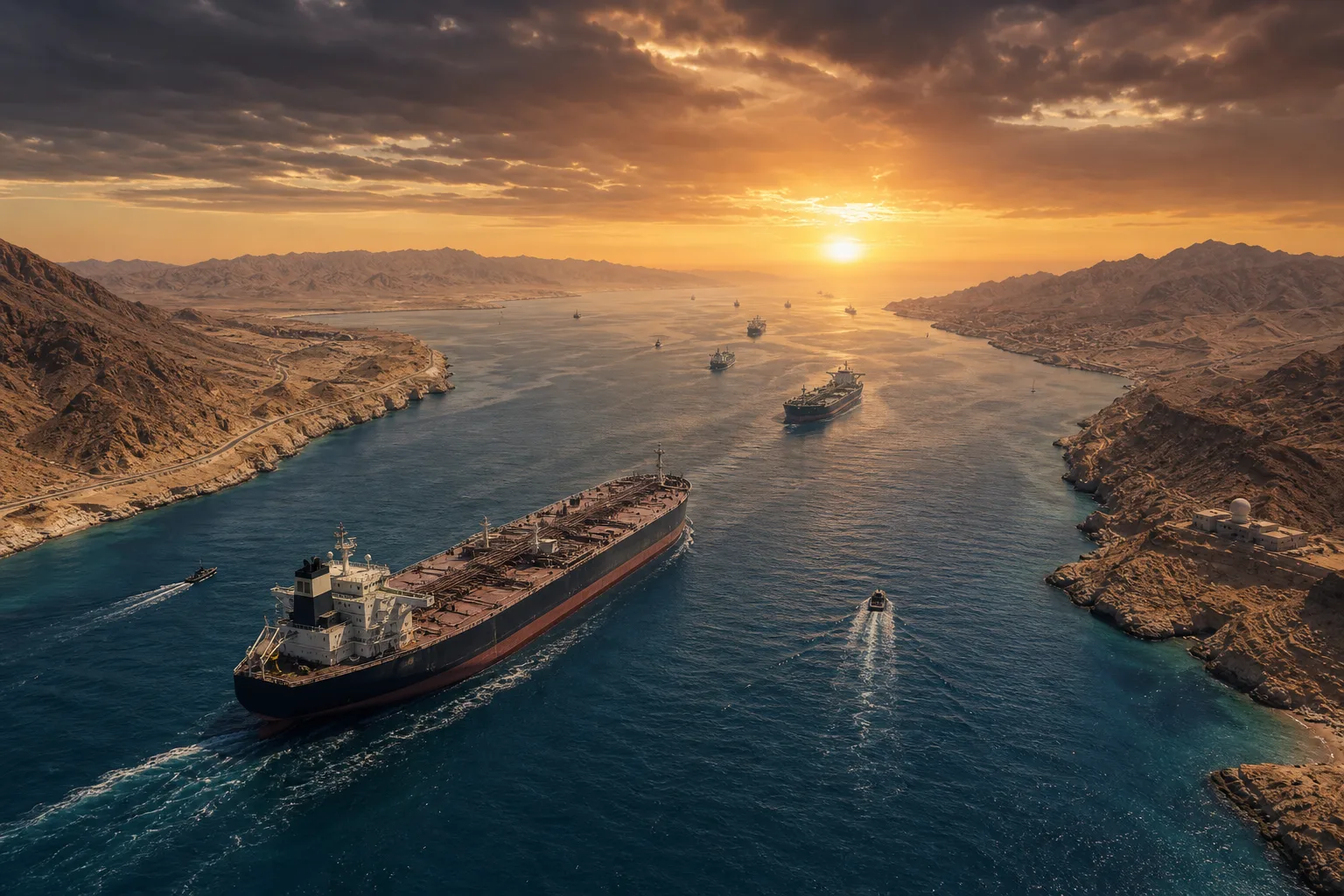
The Houthis named the tankers Encelia and Layla. They said both violated a maritime blockade the group declared this week against Saudi Red Sea ports - a blockade announced Monday, now enforced with fire.
Saudi Arabia’s SPA, citing the General Transport Authority, confirmed an attack on Encelia while it sailed the Red Sea: fire at the bow, crew safe, vessel secured, environment measures taken. A maritime security source said Encelia transmitted a VHF distress call near the outer limits of Jizan, reporting a missile strike. The attack on Layla stayed thinner in official Saudi confirmation. The Houthis also claimed they forced about ten ships to turn back; ship-tracking earlier showed five tankers changing course after the blockade warning, two signaling toward the Suez Canal.
This is the first known Houthi hit on Saudi ships since that blockade went up. Markets do not need a second confirmed fire to move. They need a credible threat to an export route. They got one.
| Signal | Thursday |
|---|---|
| Brent close | $100.69 (~+7%) |
| WTI | surged into the low $90s |
| US avg gas | ~$4.09 / gallon |
| US strikes on Iran | 12th consecutive night (CENTCOM) |
| Tankers | Encelia (confirmed fire), Layla (claimed) |
| Month move | Brent up ~33%+ |
Why the Red Sea matters more than a headline
For months the scare story was Hormuz. Iran’s near-closure of that Gulf choke point earlier in the war already pushed Saudi barrels toward Plan B: ship more crude west to the Red Sea port of Yanbu, then out through Bab el-Mandeb. Analysts have put Yanbu-linked flows in the ballpark of millions of barrels a day that were meant to dodge Hormuz risk.
Now the Houthis - sitting on the opposite end of the peninsula, near Bab el-Mandeb - are trying to jam Plan B. If Red Sea exits get expensive or unsafe, the remaining northern path is Suez: longer, costlier, slower. Insurers raise war-risk premiums. Captains reroute. Traders buy fear. That chain is why two tankers can move a global benchmark harder than a dozen diplomatic statements.
Put simply: Hormuz was already broken. Thursday threatened to break the workaround.
Night twelve, and the escalation ladder
US Central Command says American forces completed a 12th straight night of strikes on Iranian targets - air defenses, drone storage, military infrastructure - with B-1 bombers back in the mix after a quieter stretch. Iran answers with “eye for an eye” language. Gulf states report intercepts. The map keeps widening even when the White House still talks about deals.
Trump’s Thursday messaging stacked three rungs on the same ladder:
- Hold Iran responsible for further Houthi shipping attacks, with “major military punishment” for Tehran and the rebels.
- Earlier warning that the US would destroy an Iranian bridge or power plant each time Tehran hits a ship in Hormuz.
- An Axios interview line that he is “considering a massive attack” - “Bigger than ever before. I am close to making a decision. We are all set for it.”
Secretary of State Marco Rubio said Iran was privately pushing Washington for an end to the war but was not yet “ready,” and that the Houthis got “suckered” into the shipping-lane fight. Mediators in Qatar, Pakistan and Egypt have floated a 10-day ceasefire. The oil pit is not pricing ten days of calm. It is pricing two choke points at once.
Washington’s other screen: the House tries to hit pause
While Brent ripped higher, the House narrowly passed a resolution seeking to require congressional approval for military action against Iran - a second warning to Trump, with some Republicans peeling off. It is more symbolic than decisive. Presidents in wartime rarely treat such votes as an off switch.
Still, the split-screen matters politically. Capitol Hill is arguing about war powers. The energy market is arguing about barrels. November congressional elections sit in the background while gasoline crosses four dollars and an unpopular war asks voters to pay twice - in attention and at the pump.
From Strait of Hormuz to your fill-up
Wars in the Gulf used to feel distant until the receipt. A hundred-dollar Brent is the receipt.
Here is the transmission belt:
- Threat to sailings → higher insurance
- Higher insurance → fewer willing ships / longer routes
- Longer routes → tighter prompt supply
- Tighter supply → futures spike
- Futures spike → wholesale gasoline follows
- Wholesale follows → AAA averages tick up
That is how a missile claim near Jizan becomes a number on a US gas station sign within days. It is also why traders treat Bab el-Mandeb chatter as seriously as Hormuz chatter now. One choke point is a crisis. Two is a regime change for the oil market.
The conflict that began with US-Israel strikes on Iran in late February is approaching its fifth month. Thursday did not invent the war. It invented a clearer price for it.
What to watch next
- Whether Saudi or independent sources confirm damage to Layla
- Whether more tankers divert from Red Sea / Saudi ports
- Whether Trump moves from “considering” a massive strike to ordering one
- Whether the House resolution stays symbolic or hardens into a real funding fight
- Whether any 10-day ceasefire talk survives contact with the next overnight raid
In short
- Brent closed $100.69 after Houthi claims on Saudi tankers Encelia and Layla
- Red Sea blockade threatens the Yanbu / Bab el-Mandeb workaround for a damaged Hormuz
- US on night 12 of strikes; Trump threatens bigger punishment; House votes to restrain him
- US gas ~$4.09 - the war’s clearest domestic receipt
The strikes are overseas. The triple-digit oil is not. Thursday made the connection impossible to shrug off - two ships, one strait, and a barrel that finally told the truth out loud.